
Roof Leak Repair in Charlotte, NC: Where Is the Leak Coming From?
Leak guide for Charlotte homeowners
The stain on your ceiling is rarely directly under the hole in the roof. Here are the most common sources of leaks, what to do the moment you find one, and how a leak gets traced and repaired.
5.0 on Google, 253 reviewsA+ Better Business Bureau5-year residential workmanship warrantySilver, Best Roofing Company, Charlotte's Best 2025
A roof leak is rarely where it first appears. Water follows the slope of the roof, then the rafters and decking, and can travel several feet before it shows up as a ceiling stain. Think of a drop of water running down a string: it ends up far from where it started, and you have to follow the string back to find the source.
If you are searching for roof leak repair in Charlotte, NC, or typed roof leak repair near me, this guide covers where leaks usually start, how to tell a roof leak from other causes, what to do first, and what a repair involves. If water is coming in right now, go straight to our emergency roof repair page or call 980-275-1085. We serve Charlotte and the surrounding towns; see our service areas.
The short answer
- The most common leak sources are flashing, vent pipe boots, damaged or missing shingles, valleys and skylights.
- The stain inside is usually downhill from the entry point, so the source is typically higher up the roof than you expect.
- Protect the space, take photos, stay off a wet roof and call a roofer. A free inspection finds the source.
Why the Stain Is Rarely Under the Leak
How water travels
Water enters at a weak spot, runs down the underlayment or decking, then follows a rafter or the top of the ceiling drywall until it finds a low point or a gap. The drip can be several feet from the entry point.
Why it matters
Patching the spot where it drips inside does not stop the leak. A repair only works when it is made at the source, which is usually uphill from the stain.
What to look for in the attic
Wet or compressed insulation, dark or rusty stains on the rafters and decking, mold or a musty smell, and daylight around pipes or the chimney. Only go into the attic if you can do so safely.
What to look for on the ceiling
Brown or yellow rings, bubbling or peeling paint, sagging drywall and stains that grow after rain. A stain that appears after every storm points to the roof.
Common Sources of Roof Leaks in Charlotte
Flashing
Metal flashing seals the roof where it meets chimneys, walls, dormers and skylights. When it rusts, lifts or its sealant fails, water gets behind it. It is one of the most common leak points.
Vent pipe boots
The rubber collar around plumbing vent pipes cracks in the sun over time, leaving a gap right next to the pipe.
Damaged or missing shingles
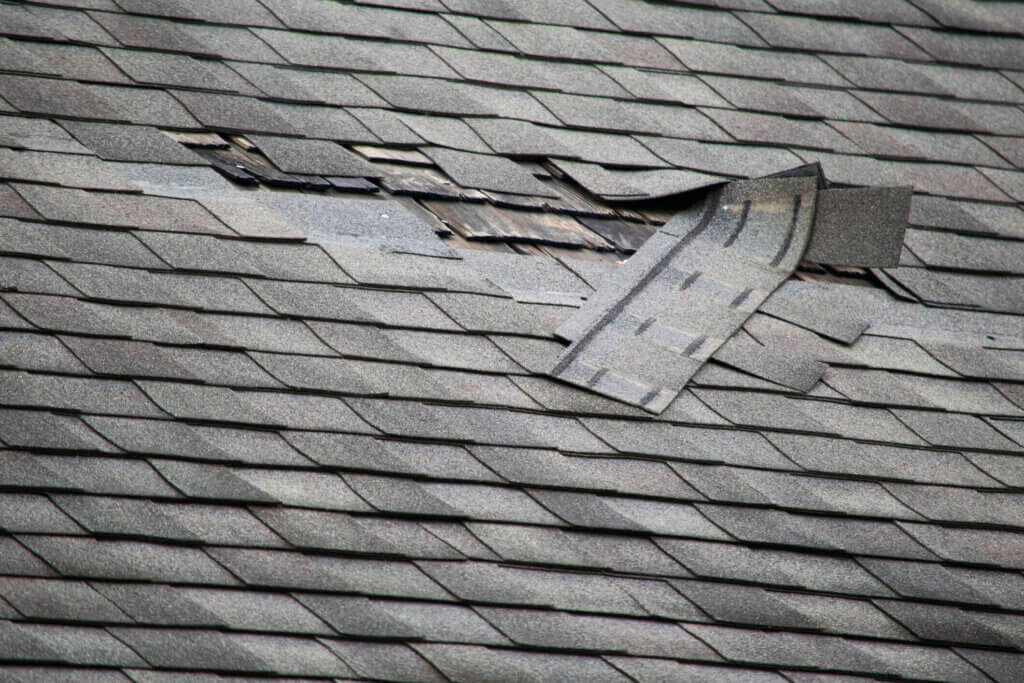
Wind can lift and crease shingles, hail can bruise them, and age can crack them. A single missing shingle can let water reach the underlayment.
Valleys
Where two roof slopes meet, a lot of water funnels through a small area. Worn shingles or flashing in a valley can leak.
Exposed nails and failed sealant
Nails that back out or were not covered, and sealant that has dried and cracked, give water a path through the roof surface.
Skylights
The seal and flashing around a skylight can fail long before the roof does.
Clogged gutters
Debris can back water up at the eave and push it under the first row of shingles.
An aging roof
When shingles are worn, brittle or losing granules across the whole roof, leaks tend to show up in several places over time.
Where to Look First: Anything That Pokes Through the Roof
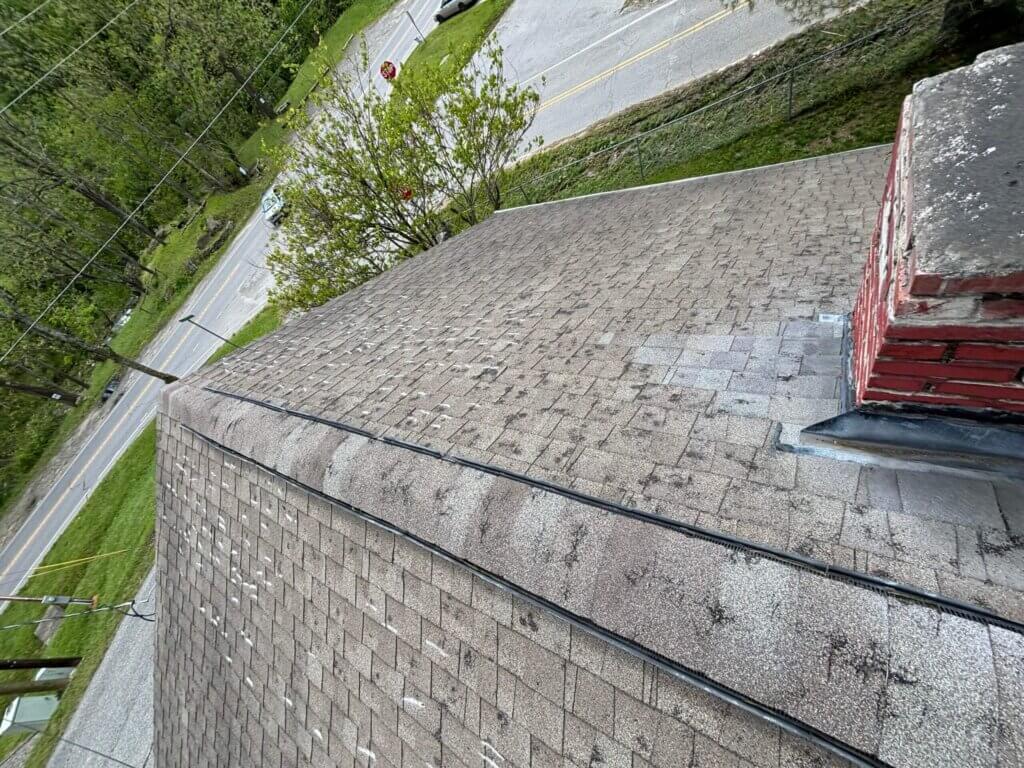
Chimneys
Flashing at the base and sides of a chimney, and the mortar cap on top, are classic leak points.
Pipes and vents
Plumbing vents, exhaust fans and other penetrations each have their own seal. Check for cracked rubber or rust.
Valleys, dormers and walls
Anywhere a roof meets a wall or another roof slope is a place where flashing has to do the work shingles cannot.
Not sure where to start?
You do not need to climb up to find it. A roofer can trace the source safely. Request a free roof inspection.
Not Every Drip Is a Roof Leak
Attic condensation
Warm, humid air can condense on cold roof decking or ductwork and drip. Poor attic ventilation makes it worse.
Bath fans venting into the attic
A bathroom fan that vents into the attic instead of outside can soak the insulation and decking above it.
HVAC condensate lines
A clogged or disconnected air conditioner drain line can leak into a ceiling, especially in summer.
Plumbing
A leak in a supply or drain line above the ceiling can look just like a roof leak. If the stain shows up when it is not raining, check this too.
If the stain only appears after rain, a roof source is likely. If it shows up in dry weather, look at plumbing, HVAC and ventilation as well. An inspection can help sort out which is which.
What to Do the Moment You Find a Leak
1. Protect the space
Move furniture and valuables, put a bucket under the drip and lay towels. If water is near a light fixture or outlet, turn off the breaker for that area.
2. Take photos
Photograph the stain, any dripping water and any visible damage, with dates. This helps if you file an insurance claim.
3. Stay off the roof
Wet roofs are slippery and dangerous. Do not climb up to look for the leak or patch it yourself.
4. Check the attic, if safe
Look for wet insulation, stains or daylight. Take a photo and note where it is.
5. Call a roofer
The sooner the source is found, the less damage to insulation, decking and drywall. For an active leak, see our emergency roof repair page.
6. Ask about a temporary fix
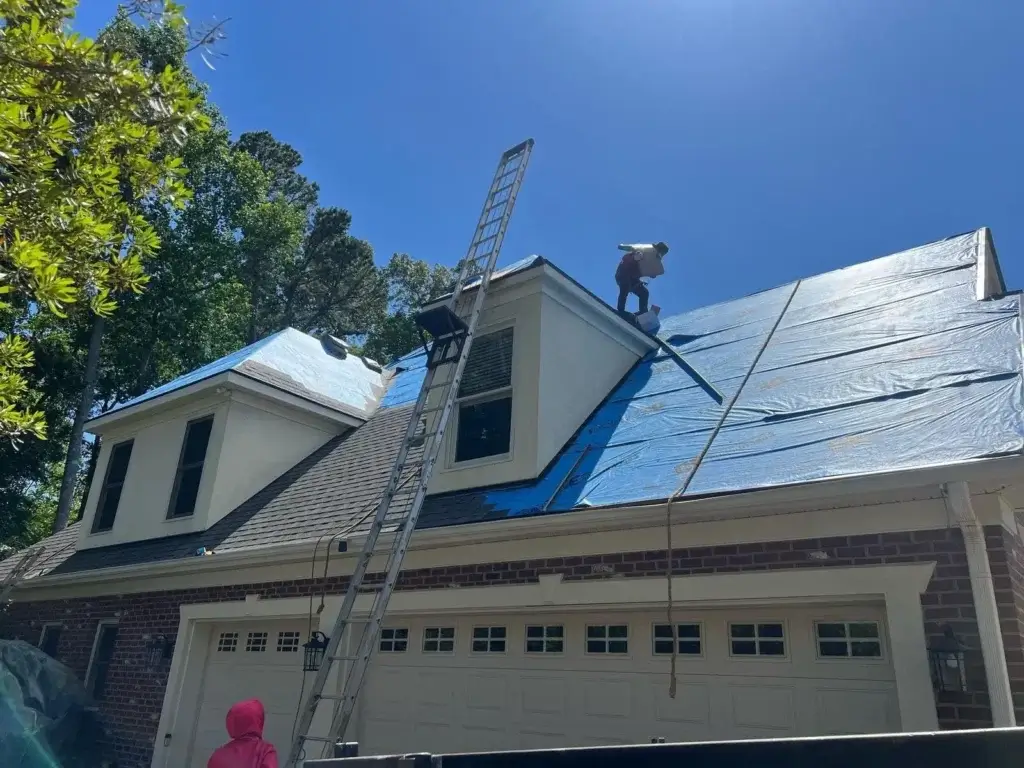
If more rain is coming, a roofer can tarp or temporarily seal the area while a permanent repair is arranged.
What a Roof Leak Inspection Covers
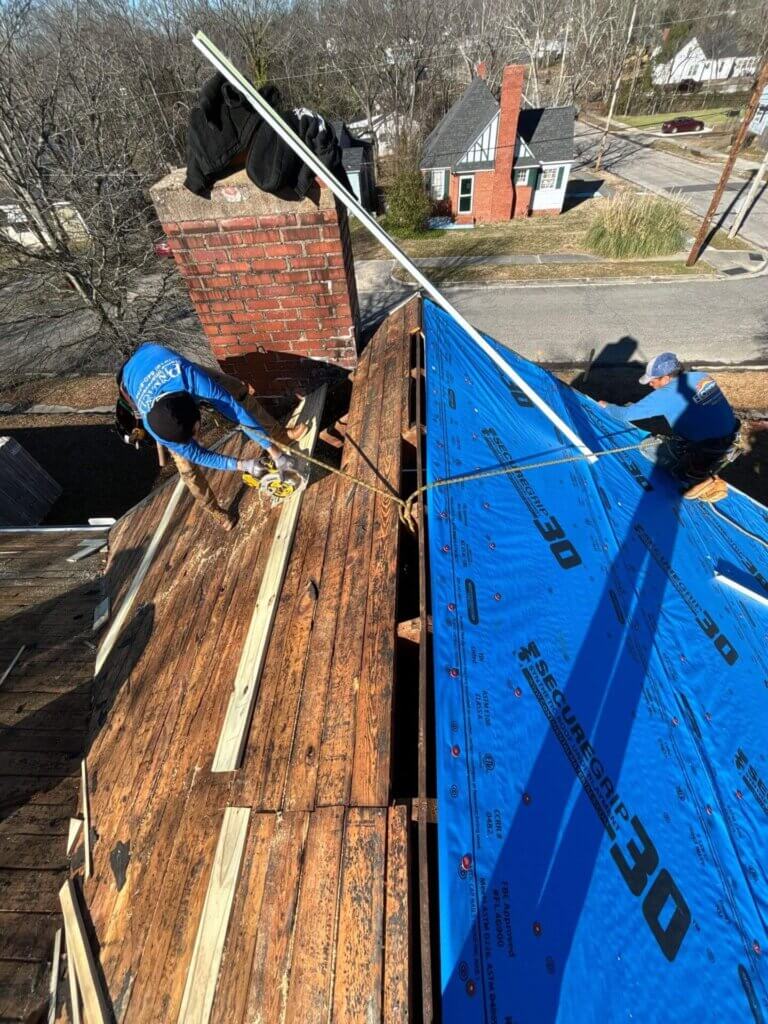
The roof surface
Shingles, flashing, vent boots, valleys, skylights and anything else that goes through the roof.
The attic
Decking, rafters and insulation for moisture, stains and signs of past leaks, plus ventilation. Attic leak repair starts with finding where the water gets in.
Tracing the source
Working uphill from the stain to find where water gets in, rather than guessing from the ceiling.
Your options
You get a clear explanation of what is wrong and whether a repair will hold or the roof needs more. See our roof repair and roof leak pages.
Roof Leak Repair Charlotte NC: What a Fix Involves
A repair usually works when
Repair the leak
- The leak comes from one identifiable spot, such as flashing, a vent boot or a few shingles
- The decking and insulation are mostly dry and sound
- The rest of the roof is in good condition with years of life left
Replacement usually makes sense when
Replace the roof
- Shingles are worn, curling or losing granules across the roof
- Leaks keep returning in different places
- Storm damage is widespread, or the decking is damaged in several areas
- The roof is near the end of its general service life
Repairing the roof stops the water. Ceiling leak repair, insulation and paint inside is a separate job, so ask what is included before work starts. See our roof repair vs. replacement guide, our shingle roof repair and metal roof repair pages, and our roof replacement page.
Insurance and Cost
Will insurance cover it?
Leaks from a covered event, such as hail or wind, may be covered. Wear from age usually is not. Photos and a documented inspection help. See how we help with roof insurance claims, storm and hail damage and roof damage repair.
What affects the cost?
The cause and number of leak sources, how easy the roof is to reach, the roof pitch and material, and whether decking or insulation underneath is damaged.
Every leak is different, so we give estimates after an inspection instead of listing prices. Request a free roof estimate, or ask about roofing financing options.
Leaks on Commercial Roofs and Townhomes
Flat and low-slope roofs leak differently than a pitched shingle roof, usually at seams, drains and flashing around rooftop equipment. We repair leaks on commercial buildings and townhomes too. See our pages on commercial roof leak repair, commercial flat roof repair and townhome roof repair.
Related Roofing Services
Roof Leak Questions, Answered
How do I find where my roof is leaking?
Start inside. Check the ceiling stain, then go to the attic if you can do so safely and look for wet insulation, dark stains on the rafters or decking, and daylight coming through. Then look uphill from the stain, because water travels along framing before it drips. Common entry points are flashing, vent pipe boots, valleys, skylights and damaged shingles. A roofer can trace the source in a free roof inspection.
Why is my ceiling leaking when it is not raining?
Water can keep moving through insulation and framing for hours or days after a storm, so a stain can appear long after the rain stops. It is also possible the water is not coming from the roof. Condensation in the attic, a bath fan venting into the attic, an HVAC condensate line or a plumbing leak can all look like a roof leak. A roof inspection can help sort out which one you have.
Can a roof leak be repaired without replacing the roof?
Often, yes. A leak from one identifiable spot, such as flashing, a vent boot or a few damaged shingles, can usually be repaired if the rest of the roof is in good shape. If the shingles are worn out across the roof, leaks keep returning in new places or storm damage is widespread, replacement usually makes more sense. See our guide to roof repair vs. replacement.
What should I do first when my roof is leaking?
Protect your belongings and the space: move furniture, set out a bucket and lay towels. Take photos of the leak and any damage. If water is near a light fixture or outlet, turn off the breaker for that area. Do not climb onto a wet roof. Then call a roofer. For an active leak, see our emergency roof repair page.
How much does roof leak repair cost in Charlotte?
It depends on the cause, so we do not publish a single number. A small flashing or vent boot repair is a very different job than repairs across a larger area, and the cost depends on how easy the roof is to reach and whether decking or insulation underneath is damaged. After a free inspection, we give you a free estimate. You can request a roof estimate or ask about roofing financing options.
Will insurance pay for a roof leak?
It can when the leak comes from a covered event, such as hail or wind damage. Leaks caused by age or lack of maintenance are usually not covered. Policies differ, so check yours. Photos taken right away and a documented inspection help if you file a claim. See how we help with roof insurance claims and storm and hail damage.
Can I fix a roof leak myself?
A tarp or a dab of sealant can buy a little time, but working on a roof is dangerous, especially when it is wet, and a patch on the wrong spot can trap water and make the damage worse. We recommend leaving roof work to a professional and limiting your own steps to protecting the inside of the home and documenting the damage.
Do you repair commercial roof leaks too?
Yes. We repair leaks on flat and low-slope commercial roofs as well as homes and townhomes. See our pages on commercial roof leak repair, commercial flat roof repair and townhome roof repair.
Get a Free Roof Leak Inspection in Charlotte
Whether you need leaking roof repair now or want to find out where that ceiling stain is coming from, our team will look at the roof and tell you what we find. Every inspection and estimate is free, and our residential work is backed by a 5-year workmanship warranty. Call or text, or book online and an estimator will reach out shortly.